

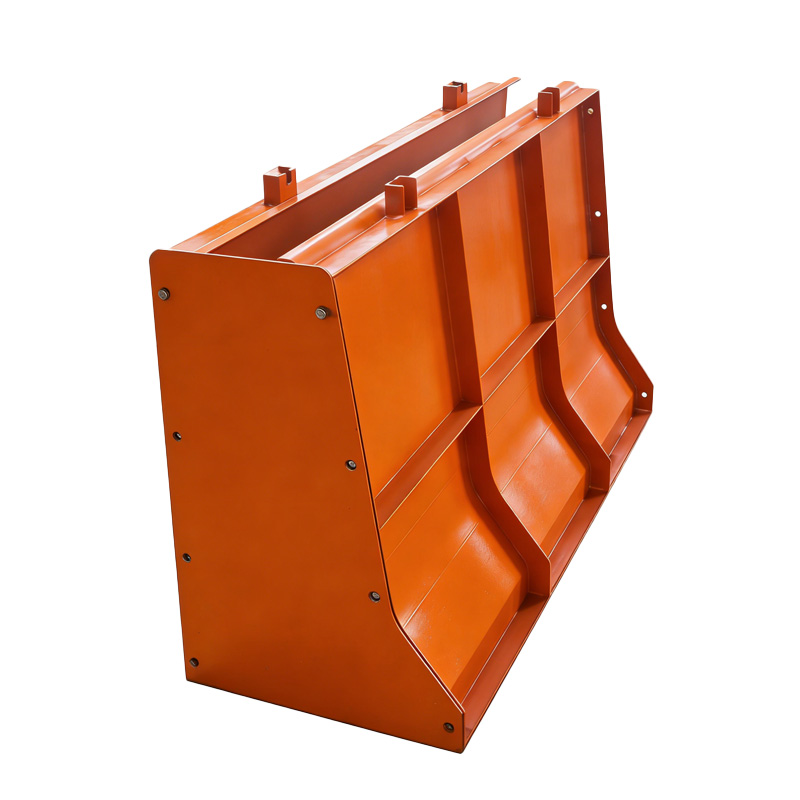
China’s Highway Expansion: Massive demand for Jersey barrier steel molds and central divider molds drives innovation in modular, fast-setup systems for expressway networks. As China accelerates the expansion and upgrading of its expressway network, the demand for high-quality, efficient highway safety facilities has surged, particularly for Jersey barrier steel molds and central divider steel molds, which are core components in ensuring road safety and traffic order. This massive market demand has become a key driving force for technological innovation in the steel mold industry, prompting manufacturers to focus on developing modular and fast-setup systems to meet the urgent needs of large-scale expressway construction projects.
Against the backdrop of China’s continuous promotion of highway infrastructure upgrading, the Ministry of Transport has issued the “Action Plan for Refined Improvement of Highway Traffic Safety Facilities (2024—2026)”, which clearly requires that central dividers should have four capabilities: rigid protection, rapid installation, durable adaptation, and visual guidance. It also points out that more than 37% of the existing isolation facilities in expressways and urban expressways across the country have problems such as structural aging, linear deviation, and insufficient night reflection, which urgently need to be systematically replaced by new Jersey barriers and wing-wall isolation piers produced in batches through standardized molds . This policy orientation has further amplified the market demand for Jersey barrier steel molds and central divider molds, and put forward higher requirements for the performance and efficiency of steel molds.
To respond to this demand, leading domestic steel mold manufacturers have stepped up technological research and development, focusing on breaking through the bottlenecks of traditional steel mold systems such as cumbersome assembly, long construction cycles, and poor adaptability. These manufacturers have developed a modular Jersey barrier steel mold system, which adopts a unified mold base benchmark, allowing customers to switch between different specifications by replacing inserts, greatly reducing the pressure of mold inventory. At the same time, the modular design enables quick assembly and disassembly of the mold, which not only reduces on-site labor costs but also shortens the construction period by more than 40% compared with traditional molds.